
The procedures and examples below are editorial tools. They describe a possible approach, not a test conducted by the named initiative.
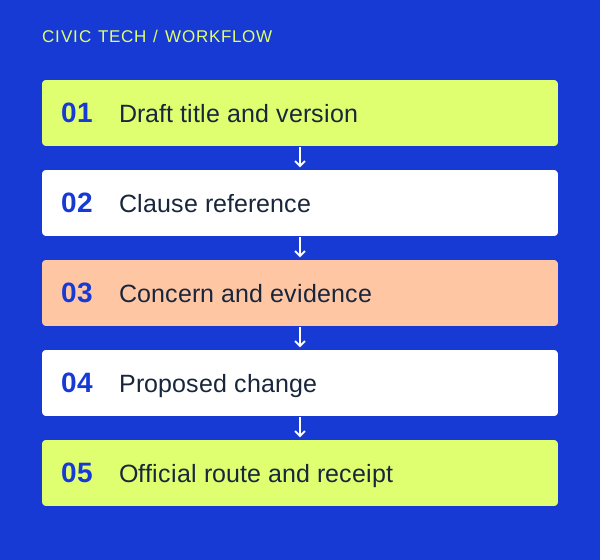
- Draft title and version
- Clause reference
- Concern and evidence
- Proposed change
- Official route and receipt
Anchor the comment to the draft
Dokeza and DEAR Citizen are described in the May 2024 booklet as legislative participation initiatives. Their common design question is how to turn public views into something a reviewer can use. Start with the issuing authority’s draft, version, publication date and submission instructions. Preserve the exact clause reference. Do not comment on a copied extract without checking whether a later version changed its wording or numbering.
Separate the concern and the proposal
Use three fields: what the clause says, the practical concern and the proposed change. Explain who would be affected and the basis of the concern. A comment may describe lived experience, documentary evidence or a preferred policy; label these clearly. If you propose replacement wording, show it separately from the original. Avoid implying legal expertise or that a platform annotation itself constitutes a valid official submission.
Make inclusion part of the workflow
Offer plain-language explanations without presenting them as the legal text. Provide assisted submissions and the languages relevant to the participants. Moderate personal attacks and remove unnecessary personal identifiers. Ask permission before attributing a contribution by name. If multiple people report the same issue, preserve the number of contributions while summarising the argument; volume alone does not establish that the argument is correct.
Keep delivery evidence
Assign a reviewer to check the final version and the current submission route. Record the delivery time, destination and acknowledgement. Publish a summary of the proposals and any reasoned response, with personal details removed. Retain a change log so contributors can understand what was edited before delivery. If the official consultation has closed, label subsequent discussion as community analysis rather than an open government consultation.
Working template
- Draft title and version
- Clause reference
- Concern and evidence
- Proposed change
- Official route and receipt
Illustrative example
In an illustrative transport consultation, a contributor identifies the clause on access, explains a barrier for wheelchair users and suggests clearer wording. A facilitator checks the cited draft and official instructions before forwarding the submission.