
ECDPM / 2023-07-03
Make an ECOWAS evidence brief usable
Distinguish technical cooperation from a policy request.
The original research
The 2023 study contrasts sustained technical cooperation, including early warning, with more limited engagement on civic rights and political accountability in ECOWAS.
Martin Ronceray; Latyr Tine; Maëlle Salzinger; Rukia Mohamed Bakari · 2023-07-03
Read the original PDF ↗The procedures and examples below are editorial tools. They describe a possible approach, not a test conducted by the named initiative.
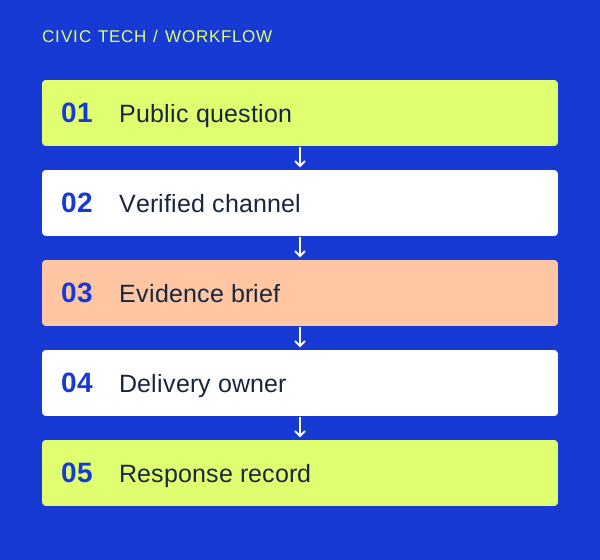
- Public question
- Verified channel
- Evidence brief
- Delivery owner
- Response record
Confirm the participation route
Begin by naming what your contribution asks an institution to do. An early-warning dataset, an electoral education resource and a request about civic rights have different intended recipients and risks. Identify the mandate and current participation route for the chosen task. The 2023 paper supplies institutional context; it does not establish a current consultation or permission to transmit private reports.
Prepare the evidence
Prepare a two-part brief: evidence and requested action. For evidence, state the collection period, coverage, method, exclusions and uncertainty. For the request, name the decision, responsible actor and proposed follow-up. Publish a redacted version only if it will not expose contributors. Agree who can correct a record and who owns the response after delivery.
Apply the method
In an illustrative early-warning exercise, a concentration of reports is presented with the reporting areas and known gaps. The team asks for review through a verified channel, not automatic action based on a public map. Keep a record of the receiving institution’s response separately from the team’s interpretation. This is a preparation exercise, not an operational warning service.
Working template
- Public question
- Verified channel
- Evidence brief
- Delivery owner
- Response record