
The procedures and examples below are editorial tools. They describe a possible approach, not a test conducted by the named initiative.
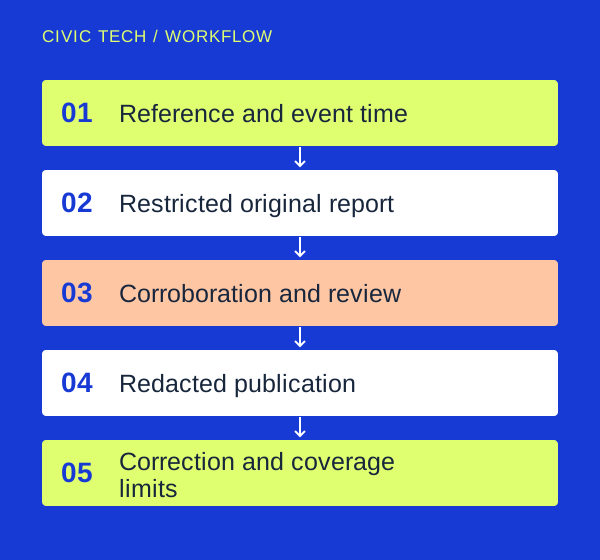
- Reference and event time
- Restricted original report
- Corroboration and review
- Redacted publication
- Correction and coverage limits
Define the service boundary
Angazakura, ZABE and Etu Jamm are described in the May 2024 booklet as different forms of election reporting or observation. A new reporting service should define what it receives and who reviews it. It must not imply that a public submission is an official finding. Provide current election information from the responsible authority separately from community reports. Do not revive old election dates as current instructions.
Separate receipt from verification
Keep the original submission in a restricted record and assign a reference. Record the event time separately from the submission time. Check location, duplicates, provenance and any available corroboration. Use labels such as received, under review, corroborated and disputed with explicit definitions. Lack of corroboration does not prove a report false. An item should not become “verified” merely because many accounts repeat it.
Reduce exposure
Publishing exact locations, names or photographs can expose reporters and bystanders. Review whether a coarse area and a redacted summary will meet the purpose. Do not publish identity documents, private contacts or unnecessary metadata. Explain the limitations of anonymity and the handling of attachments. Agree an escalation route for urgent matters with a qualified partner; the platform itself must not promise emergency response it cannot deliver.
Publish a correction process
Publish the evidence threshold alongside the map or list. Give affected parties a way to request correction and record the reason for a changed status. Summarise coverage limitations: where observers were present, which channels were used and where reporting was sparse. Report counts with their definitions and period. A cluster of submissions can indicate reporting activity; it does not automatically measure the prevalence of an incident across a population.
Working template
- Reference and event time
- Restricted original report
- Corroboration and review
- Redacted publication
- Correction and coverage limits
Illustrative example
An illustrative duplicate report from the same location is linked to one case rather than counted as a second incident. Its public label stays “under review” until the stated evidence threshold is met. The example is not a reported election event.