
The procedures and examples below are editorial tools. They describe a possible approach, not a test conducted by the named initiative.
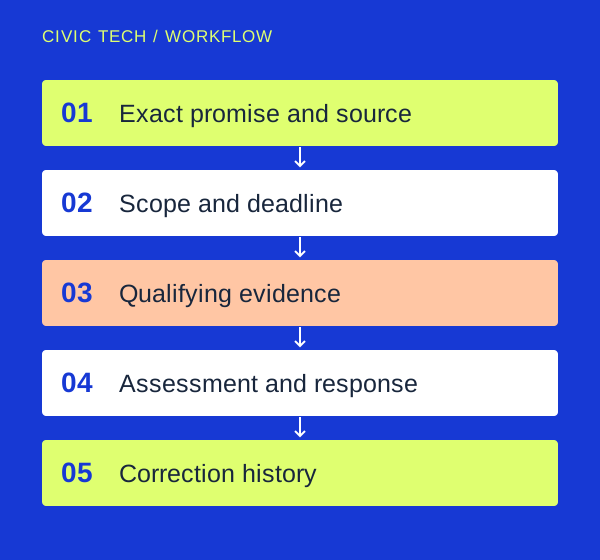
- Exact promise and source
- Scope and deadline
- Qualifying evidence
- Assessment and response
- Correction history
Define a promise that can be checked
The May 2024 booklet describes SIVIO’s Citizen Watch PCT as an accountability knowledge base and PromessasCV as a way to examine electoral promises. For a new register, preserve the original statement and its source. Separate an aspiration from a specific commitment. Record the responsible institution, place, timeframe and observable deliverable only when the statement actually contains them. Mark missing information as unspecified instead of filling gaps with assumptions.
Use an evidence standard
Create a short rule for each status before judging a promise. “No evidence found” means a documented search found no qualifying material; it is not proof that nothing happened. A procurement announcement may support a planning status, while completion requires evidence of the promised deliverable. Keep conflicting sources and explain how they affect the assessment. Date every observation so readers can distinguish a recent review from an old source.
Allow a response and correction
Give the relevant office a way to provide evidence or challenge an error. Label its response separately from the editorial assessment. Publish corrections with a reason and retain the previous status in a change log. Avoid ratings based on popularity, a political affiliation or social engagement. When comparing promises, explain why they are comparable and which differences in scope or timeframe make a ranking misleading.
Maintain the register
Assign a reviewer and a next-review date. Archive copies or stable references where permitted, and protect private material. Publish the assessment method with the register. Explain that a selected list is not the complete programme of an institution. If a promise cannot be assessed from the available documents, say so. A transparent unresolved record is more useful than an unsupported score.
Working template
- Exact promise and source
- Scope and deadline
- Qualifying evidence
- Assessment and response
- Correction history
Illustrative example
A hypothetical promise to repair ten classrooms has a dated statement and an institution’s procurement notice. That supports a procurement stage, not ten completed repairs. An editor would seek completion evidence before changing the final status.