
PROGRAMME → PRACTICE
ECOSOCC Citizens Forum: turn policy documents into an evidence brief
Read the 2022 policy report alongside the 2025 concept note, while separating recommendations, proposed sessions and demonstrated implementation.
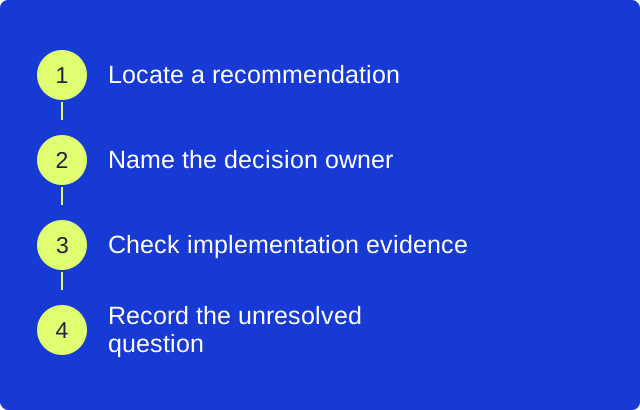
- Locate a recommendation
- Name the decision owner
- Check implementation evidence
- Record the unresolved question
Two documents, different purposes
The 25-page Citizens Forum 2022 report addresses democracy and unconstitutional changes of government. The eight-page 2025 concept note sets out the proposed Malabo forum on 8–9 July 2025. The source’s upload directory is not the date of the 2022 event. A concept note describes intentions, while a policy recommendation still requires follow-up evidence.
What the 2025 agenda adds
The concept note identifies six proposed areas: reparative justice; global and continental governance; climate resilience; health sovereignty; fiscal justice; and artificial intelligence for good. These are historical agenda headings. The document does not establish completion of its planned declaration or prove the subsequent adoption of every recommendation.
Prepare a traceable policy brief
Choose one recommendation and cite its page. Identify the relevant institution and the action it could take. Separate the evidence describing a problem from the evidence of a response. Add the publication date, geographic scope and limitations of each source. If there is no follow-up document, mark implementation as unverified rather than inferring it from an event announcement.
Connect a civic tech tool to the decision
A monitoring dashboard is useful only if it answers a decision question. Specify which records the institution needs, who can correct them and how often the brief will be reviewed. Keep personal information out of a public evidence table unless there is a lawful and necessary reason to publish it. The working template below makes missing evidence visible.
Original source files
Historical source documents in English, provided unchanged. These pages are new editorial readers, not verbatim reproductions of the original announcements.
- ECOSOCC / Citizens Forum 2022 / Policy report / 25 pages
Download PDF ↓ · Publisher’s copy ↗ - ECOSOCC / Citizens Forum 2025 / Concept note / 8 pages
Download PDF ↓ · Publisher’s copy ↗
Try the method
Worked approach: a team finds a recommendation for civil society engagement and creates a row with its page, responsible organ, expected action and follow-up source. Without a dated follow-up record, the row remains “implementation unverified”. This is a method example, not a finding about a particular recommendation.
- Recommendation and source page
- Institution and expected action
- Dated follow-up evidence
- Unverified issue or next check