
FIELD METHOD
Read a grantee fact sheet without overstating impact
Turn a programme description into an evidence trail, then identify the questions that still need answers.
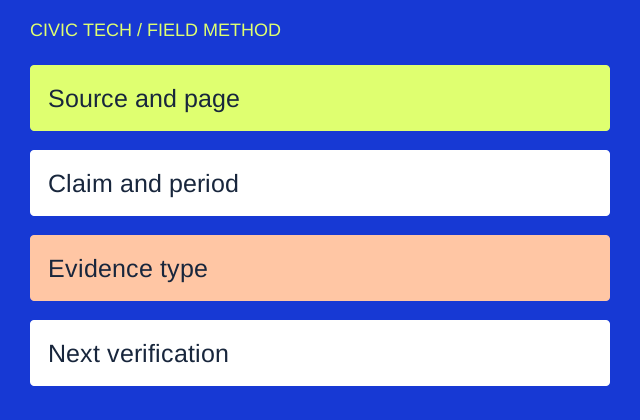
- Source and page
- Claim and period
- Evidence type
- Next verification
Start with the document’s scope
The DWF fact sheet from 2023 lists seven recipients across four countries and provides six individual profiles. An introductory list and a detailed profile are different levels of evidence. Keep the document date attached to every extracted claim.
Separate the organisation from the funded initiative
An organisation may run education, connectivity and advocacy programmes while a particular grant supports a narrower activity. Create separate fields for the organisation’s wider mission, the funded initiative, its intended participants and the public decision it addresses. Do not attribute every organisational achievement to the grant.
Distinguish plans, activities and outcomes
Write the claim before choosing a metric. A planned workshop is a commitment; an attendance record documents an activity; an institutional response documents another stage. None alone proves a lasting change in democratic participation. Mark whether the source reports an intention, an observed action or an outcome, and record who supplied the evidence.
Resolve uncertainty visibly
If two parts of a document disagree, keep the discrepancy in your research notes and seek another primary source. Do not quietly pick the more convenient date or country. Avoid publishing exact locations or identifying participant details when they are unnecessary to understand the initiative.
Build a small verification record
For each initiative, record the source page, the statement in your own words, its period, its evidence type and a follow-up question. Ask the responsible organisation for updated information through a verified contact. Until an answer arrives, retain the historical statement and leave the current-status field unconfirmed.
Put the method to work
Illustrative record: a project describes an online dialogue. Record its intended audience, date and source page. Request an agenda, anonymised participation totals and any published response. If no response is available, state that gap rather than converting the dialogue into an impact claim.
Download working template (CSV) ↓