
Use this working method to prepare a specific, testable project. It is an editorial planning guide, not an eligibility decision or a promise of funding.
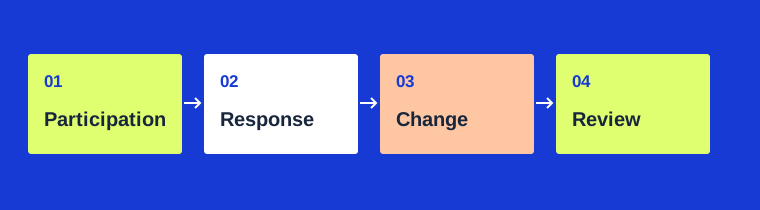
Separate activity from outcomes
Visits, downloads and submitted reports show activity. They do not show that a public service improved. Describe the intended change: an acknowledged request, a documented response, an accessible decision or a resolved issue.
Write an evidence chain
Link an activity to an expected response and then to a change that matters to participants. For each link identify an evidence source and an assumption. An assumption that an institution will respond needs testing rather than a higher target.
Set a baseline and a denominator
Record the starting situation and who is eligible to participate. Report totals with a period and a denominator. For example, ten acknowledged requests out of twenty submitted in a defined test is clearer than a claim of high engagement.
Look for exclusion
Check which communities, languages, ages and connectivity conditions are missing from the results. Collect only the information needed for this analysis. Avoid publishing small groups in a way that makes individuals identifiable.
Review mixed evidence
Combine a few transparent counts with participant feedback, staff observations and a record of institutional responses. Note failures and alternative explanations. Improvement can reflect many influences; avoid claiming that your tool alone caused a broader policy change.
Keep a decision log
At each review record what you observed, what changed in the design and what the next test will answer. Share a readable summary with participants. A dashboard is useful when it supports a decision; it is not an outcome by itself.