
Use this working method to prepare a specific, testable project. It is an editorial planning guide, not an eligibility decision or a promise of funding.
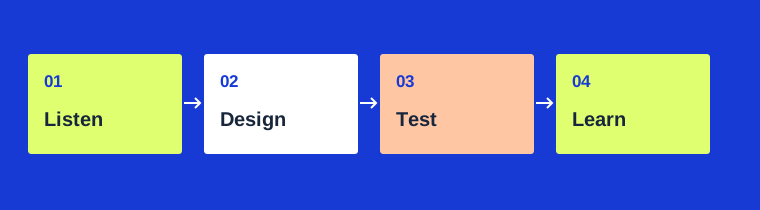
What should a civic tech concept note make clear first?
Make one public problem, the intended users and the responsible service owner explicit. Then name the small test and the evidence that would change the decision. The worked street-light example below uses fictional reports: it demonstrates a planning method, not an awarded project or an open funding call.
Project brief builder · Measure the response, not just the clicks.
Start with a public problem
Name the community, the decision or service they struggle with, and the evidence that the problem exists. Avoid starting with an app specification. Interview a few intended users and document what they already do to get help. Include people who cannot use your preferred digital channel.
Specify the response
A reporting platform needs somebody to act on reports. Identify the responsible institution or community organisation, a realistic response mechanism and an escalation route. Describe how people will know whether their contribution made a difference.
Make the first version smaller
Choose one place, one issue and one user group for an initial test. Reuse an existing open-source tool if it fits the workflow. Set a stopping condition: what evidence would tell you to change or abandon the idea?
Budget the whole intervention
Include community engagement, accessible design, translation, moderation, connectivity, training, maintenance and evaluation. Distinguish one-off development from recurring operating costs. Record the basis of each estimate instead of hiding uncertainty in a single total.
Use a one-page brief
Write five short sections: community and problem, proposed intervention, responsible institution, first test and evidence, and data safeguards. For each section name an owner and one unanswered question. The project brief tool below keeps this work on your device and can export a text file.
Check the actual call
Read the current programme terms before submitting. Check registration, geography, eligible costs, required documents, submission route and time zone. A historic PDF can explain the earlier process but does not replace the current call.
Sources and provenance
Write a concept note with a decision someone can make
A concept note becomes useful when the reader can identify one public decision, the person responsible and the evidence needed. A broad promise to improve participation does not yet define a project. Narrow it to one group in one place, one information gap and one reversible test. This exercise is fictional; it is not a funded project, government endorsement or open grant call.
A complete example: reporting street-light faults
Imagine a neighbourhood group that cannot tell whether a reported street-light fault has been received. Its proposed service would issue a receipt and show a status without publishing a resident's name or precise home address. The initial decision is whether an existing service desk can acknowledge reports and request missing information. It is not whether the group may order repairs or commit public money.
The accountable desk must agree to the trial before launch. If no responsible owner can be identified, stop at a prototype. The proposed test uses invented reports and one walkthrough with the intended service owner, not real residents' personal data. A receipt may indicate acknowledgement only; it must not imply a repair date.
Fill the six fields
- Decision: can the desk acknowledge and request clarification through an agreed route?
- Users: neighbourhood volunteers and the responsible desk; accessibility needs still require consultation.
- Evidence: compare the current reporting route with five invented faults and note where acknowledgement is unclear.
- Small test: walk through receipt, clarification and closure with the owner, using fictional inputs.
- Responsibilities: the group designs the receipt; the desk confirms its meaning and authority; neither promises repairs.
- Stop condition: pause if the owner, consent, data boundary or service meaning remains unresolved.
For a budget, distinguish prototype preparation, accessibility review and operational support. In this example each amount is unknown, with a named person asked to estimate it. A zero is not a substitute for an estimate. The concept note must name which information is missing before anyone uses it as a funding request.
Make the next decision visible
The fictional covering note asks for a review of the reporting workflow, not a grant award: “Please confirm who can acknowledge a report and whether our status wording matches your service. We will test invented reports only until the data boundary is agreed.” Record the response and adjust scope before collecting personal information.
Historical Charter/AGA application guidance can help structure an idea, but its 2022 dates do not establish a current funding opportunity. This worksheet is usable without an open call. Any real application must separately verify programme rules, deadline, eligibility and submission route.
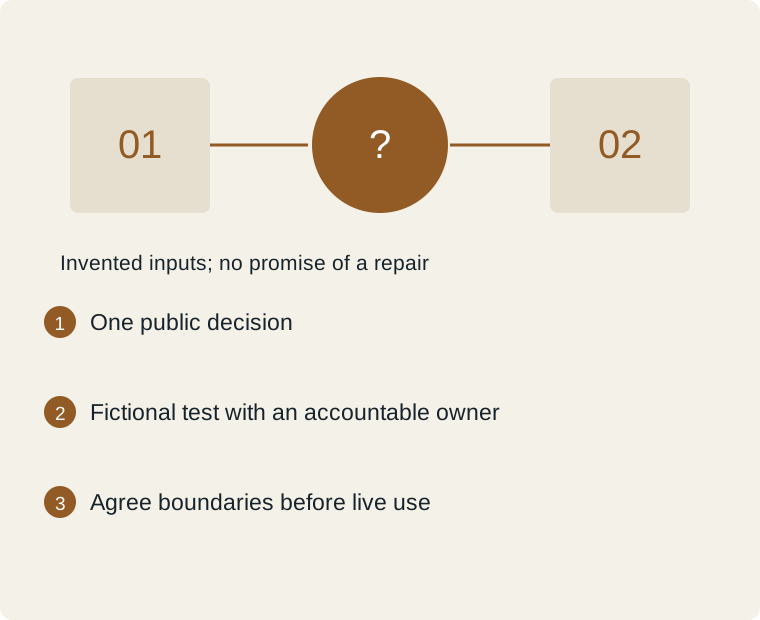
Text equivalent: One public decision → Fictional test with an accountable owner → Agree boundaries before live use
| Field | Completed example |
|---|---|
| Decision and authority | Acknowledge faults; no spending authority |
| Users and unresolved needs | Volunteers and service desk; consultation pending |
| Evidence / invented inputs | Five fictional reports; acknowledgement unclear |
| Test and owner | Receipt walkthrough with agreed desk owner |
| Budget uncertainties | Preparation, access review and support unpriced |
| Stop condition / next response | Stop without owner or agreed data boundary |
Blank worksheet and worked example ↓
Primary context: Charter/AGA guidelines — 22 December 2021; application timetable 2022